Thousands of workers suffer preventable injuries each year during equipment servicing. Many result from unexpected machine startups or the release of stored energy. The root cause? A missing or improperly followed lockout tagout procedure. At its core, the lockout tagout procedure definition centers on a physical safety system that ensures machines are de-energized and cannot be re-energized during maintenance or repair.
This isn’t just a safety best practice—it’s a legally enforceable standard in many countries, particularly under OSHA regulations in the United States. Understanding the precise definition, scope, and application of a lockout tagout (LOTO) procedure is critical for safety managers, maintenance technicians, and anyone working near industrial machinery.
Lockout Tagout Procedure Definition: A Clear Breakdown
The official lockout tagout procedure definition, as outlined by OSHA, is a structured safety process that isolates all hazardous energy sources from machinery or equipment and renders them inoperable during servicing or maintenance. This process involves two key components:
- Lockout: The use of a physical lock, applied by an authorized employee, to secure an energy-isolating device (such as a circuit breaker or valve).
- Tagout: The attachment of a warning tag to the energy-isolating device, indicating that the equipment is not to be operated until the tag is removed.
Together, these steps form a standardized system designed to protect employees from injuries caused by unexpected energization, startup, or the release of stored energy. The procedure applies to electrical, mechanical, hydraulic, pneumatic, chemical, thermal, and other energy sources.
It's crucial to note that while tagout can stand alone in some cases, OSHA considers lockout the primary and more secure method. Tagout systems are acceptable only when a lock cannot be used, provided additional safety measures are in place.
Why a LOTO Procedure Isn’t Optional
Ignoring or bypassing a lockout tagout procedure can have catastrophic consequences. Consider a real-world scenario: A maintenance technician climbs into a conveyor system to clear a jam. A coworker, unaware of the work being performed, hits the start button. The result? Severe crushing injuries—or worse.
This is not hypothetical. According to OSHA, failure to control hazardous energy accounts for nearly 10% of serious accidents in manufacturing. The financial and human costs are staggering:
- Average workers’ compensation claims exceed $30,000
- Lost productivity and equipment damage add further losses
- Companies face fines up to $156,259 per violation
A well-implemented LOTO procedure eliminates the risk of accidental startups by enforcing accountability. Each authorized employee applies their own lock and tag, ensuring that only they can remove it. This personal responsibility is the cornerstone of the process.
Key Elements of a Compliant Lockout Tagout Procedure
A proper lockout tagout procedure isn’t just a checklist—it’s a documented, site-specific plan that meets regulatory standards. The following components must be present:
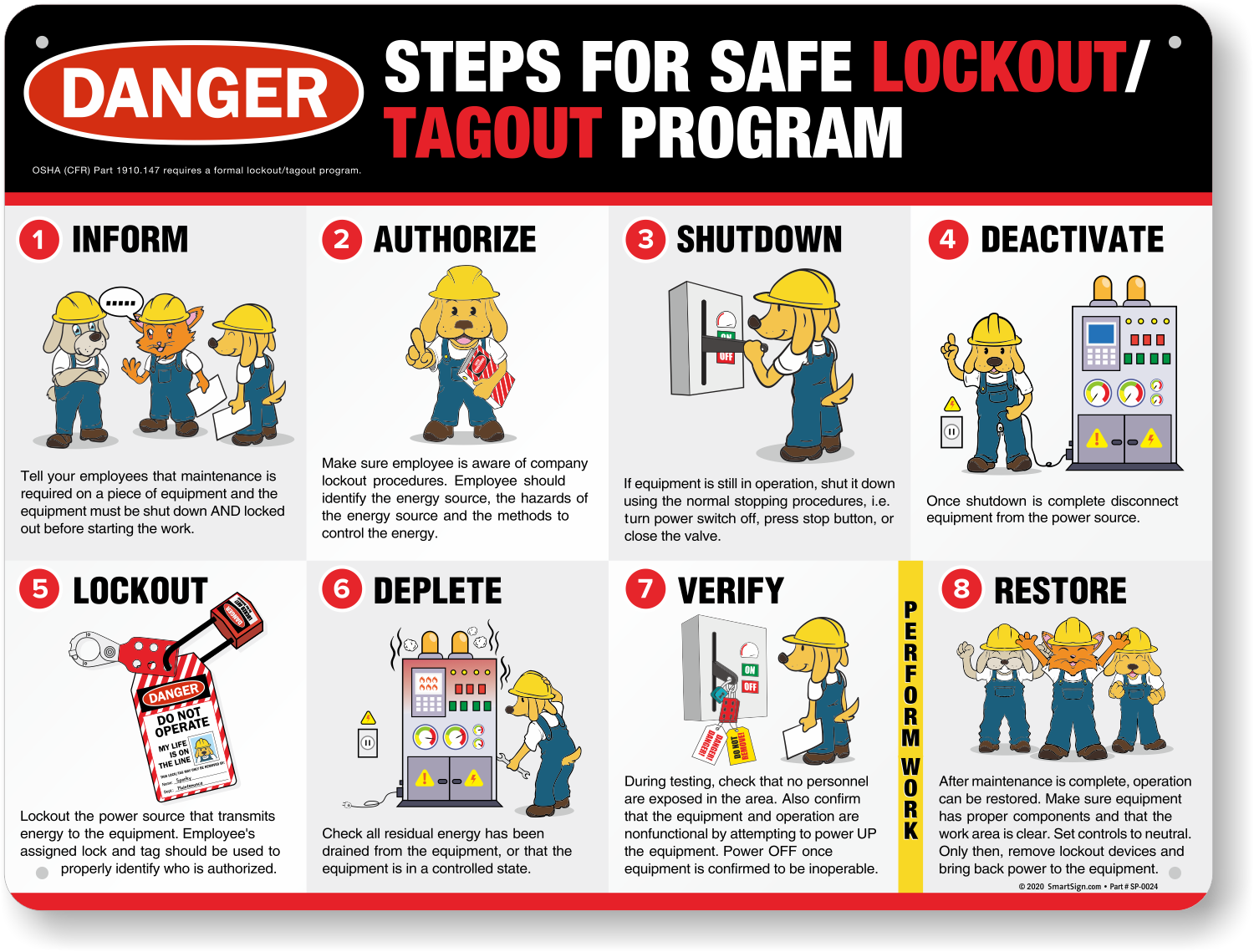
1. Energy Source Identification
Before any maintenance, all energy sources must be identified. This includes main power lines, backup batteries, hydraulic accumulators, and even gravity-fed systems.
2. Written Procedures Each machine or piece of equipment must have a written LOTO procedure. These documents detail: - Specific shut-off points - Sequence of shutdown and isolation - Type of lockout device required
3. Authorized vs. Affected Employees
- Authorized employees are trained to perform LOTO and carry out maintenance.
- Affected employees operate or use the equipment but don’t perform servicing. They must understand the purpose of LOTO and not attempt to bypass it.
4. Lockout Devices These include padlocks, valve locks, circuit breaker locks, and hasps. All locks must be: - Durable - Standardized (same color, same type) - Individually keyed (no master keys)
5. Periodic Inspections OSHA requires that LOTO procedures be inspected at least annually. These audits must verify that procedures are being followed correctly and updated when equipment changes.
How a Lockout Tagout Procedure Works: Step by Step
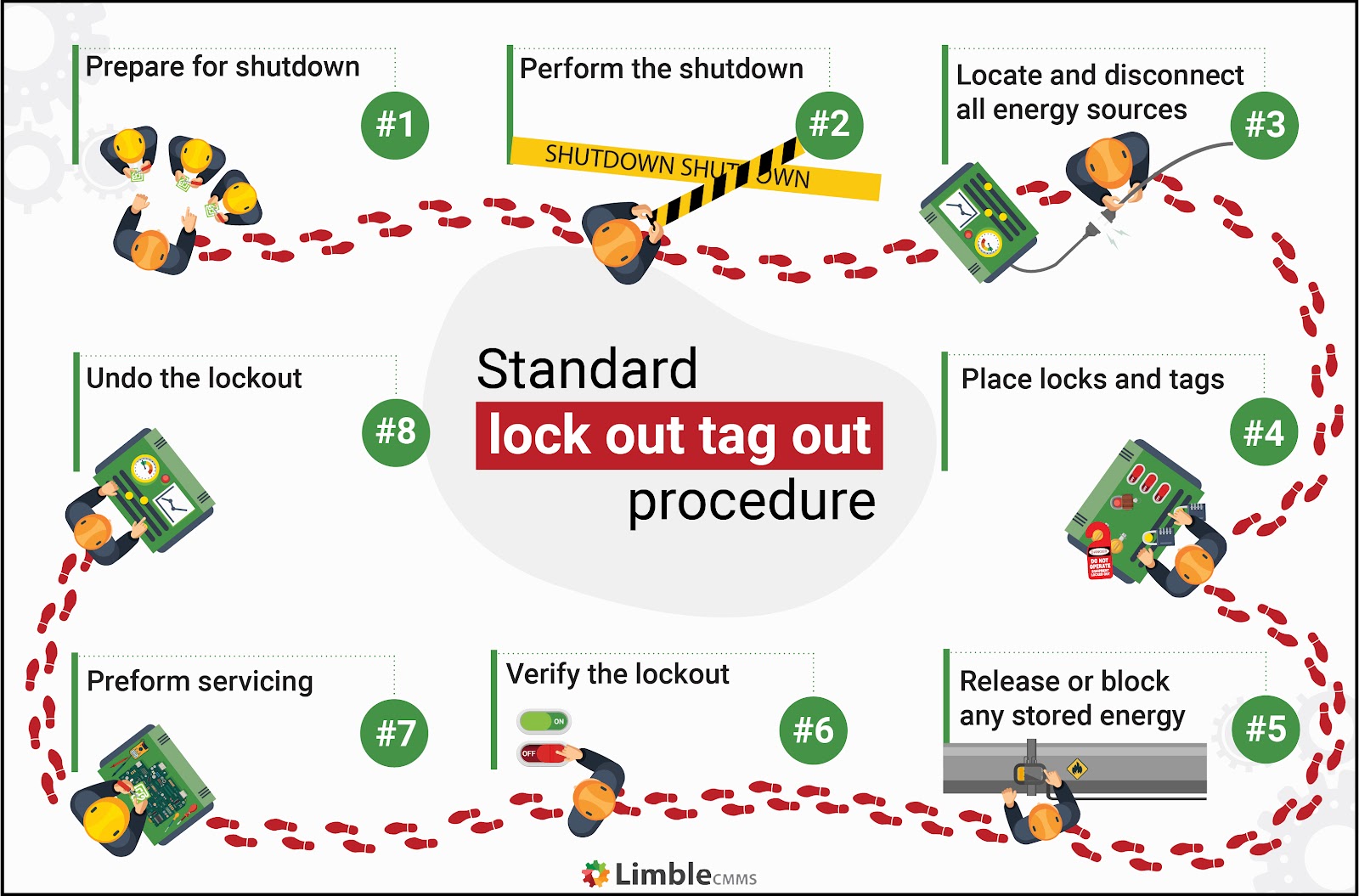
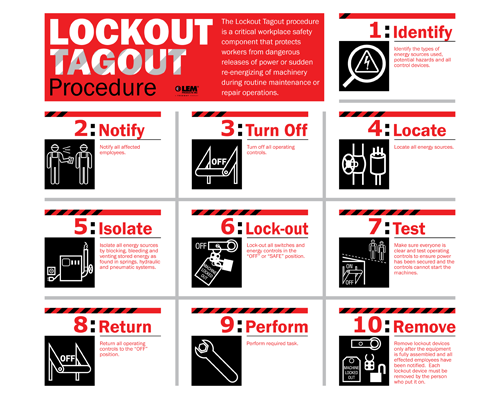
A successful LOTO procedure follows a strict, repeatable sequence. Deviating from the steps—even slightly—can compromise safety. Here’s the standard workflow:
- Preparation
- Authorized employee reviews the written LOTO procedure and notifies affected staff.
- Machine Shutdown
- Equipment is shut down using normal stop procedures. No shortcuts—this must be done deliberately.
- Isolation of Energy Sources
- All energy-isolating devices are physically disconnected. This may involve turning off breakers, closing valves, or blocking moving parts.
- Application of Locks and Tags
- Each authorized employee applies their personal lock and tag to each energy source. Group lockout boxes are used when multiple workers are involved.
- Release of Stored Energy
- Residual energy is discharged: capacitors drained, springs uncoiled, systems bled of pressure.
- Verification of Isolation
- The employee attempts to start the machine (using normal controls) to confirm zero energy. This is the most critical step—never skip verification.
- Perform Maintenance
- Only after isolation is verified can work begin.
- Removal of Locks and Restoration
- After work is complete, the authorized employee removes their lock, ensures the area is clear, and re-energizes the equipment.
This sequence is non-negotiable. Real-world failures often occur during step 6—when verification is skipped due to time pressure or overconfidence.
Common Mistakes That Undermine LOTO Safety
Even workplaces with documented procedures fall short due to recurring errors. Awareness of these pitfalls can prevent disaster:
- Using one lock for multiple energy sources – Each isolating point must be locked individually.
- Allowing shared locks or master keys – Defeats the purpose of personal accountability.
- Failing to train affected employees – Operators who don’t understand LOTO may unknowingly restart equipment.
- Skipping stored energy checks – A pressurized hydraulic line can cause injury even if the power is off.
- Inadequate documentation – Generic or outdated procedures lead to confusion during emergencies.
One plant manager reported that after correcting inconsistent tagging practices, their maintenance incident rate dropped by 60% in one year. The fix? Standardized tags with employee names, dates, and job descriptions.
Real-World Use Cases of LOTO Procedures
Case 1: Conveyor System Maintenance A packaging facility schedules weekly cleaning of a high-speed conveyor. The LOTO procedure includes locking out the main motor disconnect, blocking rollers, and tagging all control panels. Without this, a cleaning crew member could be caught in moving parts.
Case 2: Boiler Servicing A power plant technician inspects a steam boiler. The LOTO procedure isolates gas valves, electrical feed, and water supply. Stored thermal energy is vented before work begins.
Case 3: CNC Machine Repair A machinist replaces a spindle on a CNC mill. The lockout includes disconnecting power, locking the control circuit, and verifying no residual motion. Tags alert others that the machine is down for repair.
These examples show that LOTO isn’t one-size-fits-all. Each application must reflect the specific hazards and controls needed for that equipment.
Tools and Devices Used in Lockout Tagout Procedures
Implementing LOTO requires reliable hardware. Below are five essential types of devices used in standard procedures:
| Device Type | Purpose | Common Examples |
|---|---|---|
| Padlocks | Personal lock for energy-isolating devices | 1” shackle, keyed alike or unique |
| Valve Lockouts | Prevents opening of gas, steam, or fluid valves | Ball valve locks, gate valve covers |
| Circuit Breaker Locks | Secures electrical breakers in OFF position | Swing gate locks, rotary lockouts |
| Hasps and Group Lockout Boxes | Allows multiple workers to apply locks | Steel hasps, portable lockout stations |
| Warning Tags | Communicates danger and identifies responsible person | Zinc or polyester tags with durable lanyards |
Quality matters. Flimsy tags or easily bypassed locks compromise the entire system. Invest in OSHA-compliant, durable equipment.
The Legal and Operational Impact of LOTO Compliance
Beyond safety, a robust lockout tagout procedure delivers operational benefits:
- Regulatory compliance: Avoids OSHA citations and legal liability.
- Insurance advantages: Lower premiums due to reduced risk.
- Employee trust: Workers feel safer, leading to higher morale and retention.
- Downtime reduction: Clear procedures prevent rushed or unsafe workarounds.
One industrial plant reduced equipment-related downtime by 22% after standardizing LOTO across all departments. The reason? Fewer accidents meant fewer production interruptions and less downtime for incident investigations.
Final Thoughts: Safety Starts with a Definition
Understanding the lockout tagout procedure definition is more than a compliance task—it’s the foundation of a safety-first culture. A procedure isn’t effective just because it exists on paper. It must be lived, enforced, and regularly audited.
Start by auditing your current LOTO practices. Are procedures documented? Are locks personal? Is verification consistently performed? Address gaps immediately.
A proper lockout tagout procedure doesn’t just protect machines—it protects people. And in any industrial setting, that’s the ultimate measure of success.
Frequently Asked Questions
What is the main purpose of a lockout tagout procedure? The primary purpose is to prevent unexpected startup of machinery or release of hazardous energy during maintenance, protecting workers from injury.
Who is responsible for implementing a LOTO procedure? Authorized employees trained in energy control are responsible for applying locks and tags. Employers must provide training and enforce compliance.
Can tagout be used without lockout? Yes, but only if a lock cannot be applied. Tagout alone is less secure and requires additional safety measures like extra inspections or monitoring.
How often should LOTO procedures be reviewed? OSHA requires that each procedure be inspected at least annually to ensure it’s accurate and being followed correctly.
What qualifies as hazardous energy in LOTO? Hazardous energy includes electrical, mechanical, hydraulic, pneumatic, chemical, thermal, and gravitational sources that could cause injury if released.
Do all machines require a LOTO procedure? Any machine or equipment that requires servicing and has potentially hazardous energy sources must have a documented LOTO procedure.
What happens if a LOTO procedure is not followed? Failure to follow LOTO can lead to severe injuries, regulatory fines, legal action, and increased insurance costs.
FAQ
What should you look for in What Is a Lockout Tagout Procedure? Definition and Use? Focus on relevance, practical value, and how well the solution matches real user intent.
Is What Is a Lockout Tagout Procedure? Definition and Use suitable for beginners? That depends on the workflow, but a clear step-by-step approach usually makes it easier to start.
How do you compare options around What Is a Lockout Tagout Procedure? Definition and Use? Compare features, trust signals, limitations, pricing, and ease of implementation.
What mistakes should you avoid? Avoid generic choices, weak validation, and decisions based only on marketing claims.
What is the next best step? Shortlist the most relevant options, validate them quickly, and refine from real-world results.