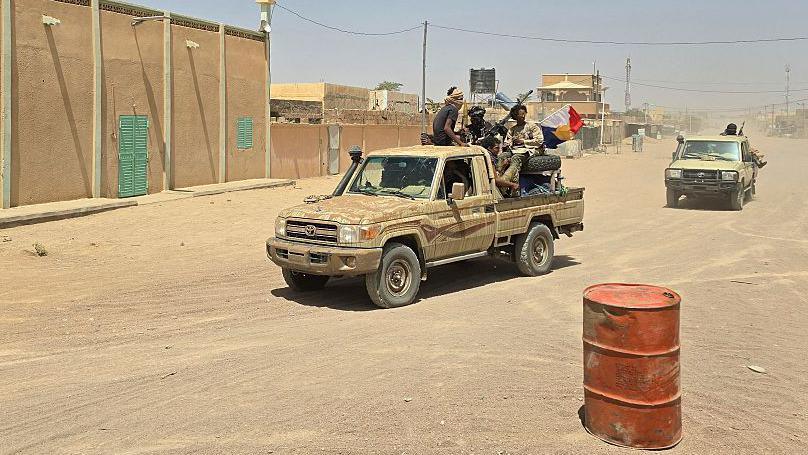
The sudden confirmation by Russia’s Africa Corps of its withdrawal from Kidal, northern Mali, marks a pivotal shift in the country’s volatile security landscape. This development comes amid a surge in attacks—both armed insurgencies and civilian casualties—raising urgent questions about the motives behind the pullout, its implications for regional stability, and what it reveals about Moscow’s broader strategy in Africa.
Kidal, long a flashpoint in Mali’s north, has seen escalating violence in recent months. Jihadist groups linked to al-Qaeda and ISIS have intensified operations, exploiting security vacuums left by retreating forces. The withdrawal of Russian operatives—widely believed to be successors to the Wagner Group—amplifies fears of further destabilization. But rather than signaling defeat, this move may reflect a calculated recalibration of Russia’s approach in the Sahel.
Why Kidal Matters in Mali’s Security Equation
Kidal is more than just a geographic location—it’s a symbolic and strategic stronghold. Historically a base for Tuareg separatist movements, the region has oscillated between autonomy and state control for decades. After the 2012 rebellion and subsequent French-led intervention, Kidal remained a contested zone, with successive Malian governments struggling to assert authority.
Russian forces, operating under the Africa Corps banner since 2023, established a visible presence in Kidal by mid-2023. Their deployment was framed as support for Mali’s junta-led military in countering jihadist threats. However, their methods—marked by heavy-handed tactics and alleged human rights abuses—drew criticism from local communities and international observers.
The confirmation of withdrawal now suggests that the cost of holding Kidal may outweigh strategic benefits. Reports indicate that Russian units faced increasing resistance not only from armed groups but also from local populations who viewed their presence as occupation rather than protection.
“The people of Kidal never wanted Russian soldiers on our land,” said a local community leader in a recent interview with Radio France Internationale. “They brought more violence, not less.”
This sentiment reflects a broader trend across the Sahel: foreign military interventions, even when invited, often deepen resentment and fuel recruitment for extremist factions.
Mali Attacks Surge as Security Gaps Widen
The timing of the withdrawal is critical. In the six weeks leading up to the announcement, Mali recorded over 20 major attacks in the northern and central regions. These include ambushes on military convoys, suicide bombings in Gao, and targeted killings of local officials.
One particularly deadly incident occurred near the village of Tinzaouaten, just south of the Algerian border. A joint Malian-Russian patrol was struck by an IED, killing at least 14 soldiers. While Russian forces survived the blast, they reportedly abandoned the area within days—foreshadowing the broader withdrawal.
The spike in attacks suggests two possibilities: either jihadist groups are exploiting the transition period to assert control, or they were directly targeting Russian presence to hasten its departure. Either way, the outcome is the same—Mali’s security forces are left exposed.
Malian military officials insist they can manage the security vacuum. “The state remains committed to defending every inch of national territory,” stated Colonel Abdoulaye Maïga, spokesperson for the Malian Armed Forces. But with limited resources, aging equipment, and low morale, many analysts remain skeptical.
The Strategic Logic Behind Russia’s Retreat

Russia’s confirmation of withdrawal from Kidal should not be mistaken for disengagement from Mali. Instead, it reflects a shift in strategy—from direct, high-risk deployments to more sustainable forms of influence.
There are several indicators pointing to this recalibration:
- Consolidation of forces in urban centers: Russian units are reportedly regrouping in Bamako, Mopti, and Gao—areas with better infrastructure and easier logistical support.
- Increased use of drone warfare and remote surveillance: Satellite imagery shows expanded Russian-operated drone facilities near Gao airport, suggesting a pivot toward aerial dominance.
- Strengthening of training programs: Rather than frontline combat, Russia is focusing on training Malian special forces, a lower-profile but longer-term investment.
Moreover, the Africa Corps appears to be distancing itself from the Wagner brand, which became synonymous with brutality and legal scrutiny after Yevgeny Prigozhin’s failed mutiny in 2023. By operating under a more formal, state-linked structure, Moscow aims to gain greater diplomatic legitimacy while maintaining operational flexibility.
“The Africa Corps is not Wagner 2.0,” a Russian defense analyst told The Moscow Times under condition of anonymity. “It’s a more disciplined, centrally controlled instrument of foreign policy.”
This evolution allows Russia to maintain leverage without bearing the full cost of occupation.
Civilian Impact: When Withdrawals Create Power Vacuums
The most immediate victims of the Kidal withdrawal are civilians. With no stable authority in place, humanitarian access has deteriorated. Médecins Sans Frontières reported that medical teams were blocked from entering the region due to ongoing clashes.
Local markets have shuttered. Schools remain closed. Families are fleeing toward Niger and Algeria, exacerbating an already severe displacement crisis. The United Nations estimates that over 300,000 people have been displaced in northern Mali since the start of the year.
Perhaps more troubling is the rise in intercommunal violence. As state and foreign forces retreat, long-simmering tensions between ethnic groups—Tuareg, Arab, and Fulani communities—are flaring into open conflict. In some villages, militias are filling the void, imposing their own rules and collecting “taxes” from residents.
This pattern is not new. It echoes what occurred in Syria and Libya, where foreign withdrawals led to protracted chaos. The lesson is clear: removing military presence without a credible political or governance alternative only deepens instability.
Geopolitical Implications Across the Sahel
Russia’s withdrawal from Kidal is not an isolated event—it’s part of a broader recalibration across its African engagements. In Burkina Faso and the Central African Republic, similar patterns are emerging: initial heavy deployment, followed by strategic retrenchment.
At the same time, Western powers are watching closely. France formally ended its military mission in Mali in 2022, but continues to support regional initiatives like the G5 Sahel. The U.S. maintains drone bases in Niger and conducts intelligence-sharing with local partners.
With Russia pulling back from frontline zones, there’s speculation about a potential opening for Western influence. But after years of military interventions that failed to bring peace, skepticism runs high.
“The West believes that when Russia leaves, they get a second chance,” said Dr. Amina Diallo, a security researcher at the Institute for Security Studies in Dakar. “But the problem isn’t just foreign presence—it’s the absence of legitimate governance.”
Unless regional and international actors address root causes—poverty, corruption, exclusion—Mali and its neighbors will remain vulnerable to recurring cycles of violence.
What’s Next for Mali’s Security Future?
The road ahead for Mali is uncertain. The junta, led by Assimi Goïta, remains in power but faces growing domestic and international pressure. Economic challenges, including sanctions from ECOWAS and declining foreign investment, limit its ability to fund long-term security operations.
In this context, Russia’s Africa Corps may yet return to Kidal—just not in the same form. Instead of boots on the ground, expect increased reliance on:
- Private military advisors embedded within Malian units
- Cyber and electronic warfare support
- Arms shipments and logistical aid
This model reduces Russian exposure while preserving strategic influence.
Meanwhile, Malian authorities must confront a hard truth: security cannot be outsourced indefinitely. Building effective, accountable institutions remains the only sustainable path to stability. But with elections repeatedly delayed and civil society suppressed, that path remains blocked.
A Turning Point in Sahel Security
The confirmation of Russia’s Africa Corps withdrawal from Kidal is more than a military update—it’s a signal of changing dynamics in one of the world’s most fragile regions. While the move may reduce immediate friction, it does not resolve the deeper crises driving violence in Mali.
The surge in attacks following the pullout underscores a fundamental reality: military presence alone cannot defeat insurgency. Without inclusive governance, economic opportunity, and regional cooperation, any security gains will be temporary.
For policymakers, journalists, and humanitarian actors, the lesson is clear: the focus must shift from troop movements to the conditions that allow extremism to thrive.
Actionable Insight: Monitor not just where foreign forces are deployed, but where local governance structures are being rebuilt. The real front lines in Mali aren’t in Kidal’s deserts—they’re in its schools, clinics, and town halls.
FAQ
Why did Russia’s Africa Corps withdraw from Kidal? The withdrawal likely reflects a strategic shift to consolidate forces in more secure urban centers, reduce exposure to attacks, and transition to indirect support through training and technology.
Are Russian forces completely leaving Mali? No. While they are withdrawing from Kidal, Russian personnel remain active in other regions like Gao and Bamako, focusing on training, intelligence, and drone operations.
Who is filling the security vacuum in Kidal? Local Malian forces are attempting to maintain control, but jihadist groups and ethnic militias are increasingly asserting influence in the absence of a strong central presence.
How have attacks in Mali changed since the withdrawal? There has been a noticeable spike in attacks, particularly in northern and central Mali, as armed groups exploit the transitional period and weakened military posture.
Is the Africa Corps the same as the Wagner Group? While many personnel may overlap, the Africa Corps operates under a more formal state-backed structure, distancing itself from Wagner’s controversial legacy.
What role does the Malian military play now? The Malian military is taking the lead in frontline operations but faces challenges including limited resources, low morale, and accusations of human rights abuses.
Could Western forces return to northern Mali? Unlikely in the near term. France has ended its combat mission, and the U.S. prefers indirect support. Regional solutions through the G5 Sahel remain the primary alternative.
FAQ
What should you look for in Russia’s Africa Corps Confirms Withdrawal from Kidal Amid Mali Attacks? Focus on relevance, practical value, and how well the solution matches real user intent.
Is Russia’s Africa Corps Confirms Withdrawal from Kidal Amid Mali Attacks suitable for beginners? That depends on the workflow, but a clear step-by-step approach usually makes it easier to start.
How do you compare options around Russia’s Africa Corps Confirms Withdrawal from Kidal Amid Mali Attacks? Compare features, trust signals, limitations, pricing, and ease of implementation.
What mistakes should you avoid? Avoid generic choices, weak validation, and decisions based only on marketing claims.
What is the next best step? Shortlist the most relevant options, validate them quickly, and refine from real-world results.